Thursday 11 January
AS I strolled along the waterfront, my next stop was at Te Papa Tongawera - or as it is more commonly known, just Te Papa. It is New Zealand's national museum and has a huge array of Māori exhibits. It also had an entire floor devoted to LOTR!
Te Papa Tongawera
Ceremonial Chair
Waka
Basket
Necklace
Skirt
Sandals
Sandals woven from flax.
Marae
Te Hono ki Hawaiki
Te Hono ki Hawaiki is not a conventional meeting-house but, rather, a foreshortened structure at the rear of the open performance space or marae atea.
Corrugated HQ Holden
This 1974 Holden Kingswood was clad with corrugated iron by Jeff Thomson in 1991 and driven around for three years. It is one of the most popularly photographed items in the museum.
Tēnā koutou katoa
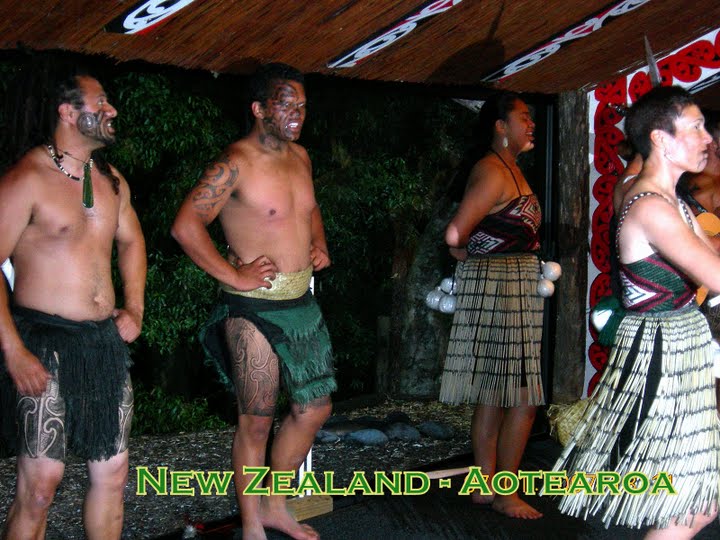
This is all about New Zealand - Aotearoa - and the time I spent there. Magical times, beautiful scenery, gushing geysers, thermal wonderlands. Hear about Waitangi Day, discover the meaning of the word "Aotearoa", see the Glaciers, read about hangis and Hakas, and visit the beautiful Bay of Islands. So come with me on a journey - a journey to The Land of The Long White Cloud.
Kia ora
CHRISTCHURCH EARTHQUAKE TRIBUTE 2011
Kia ora
Watch The Haka
Showing posts with label z Māori. Show all posts
38. Wellington - Harbour Walk
Thursday 11 January
After riding on the cable car, I strolled along the waterfront of Wellington's magnificent harbour, which I thought much prettier than Auckland's.
Wellington Harbour
Academy Galleries
Founded in 1882, the Academy of Fine Arts is now housed on the ground floor of the architecturally stunning and heritage protected Wharf Offices Apartments Building in Queen's Wharf.
The Academy Galleries support New Zealand's emerging and established artists through the sale of New Zealand Art as well as fostering a national appreciation and pride of fine art produced by artists around the country.
A non-profit making private company, the Galleries is located at 1 Queens Wharf Lambton just a 2 minute walk from Downtown Wellington.
Frank Kitts Park - Climbing Lighthouse
The lighthouse was designed in the late 1980's by Mark Pennington.
Completed in the late 1980s, Frank Kitts Park on Jervois Quay in the central city, was one of the first areas of the waterfront to be developed. The design was heavily influenced by the annual street car race that ran through the area at that time.
The waterfront also bustles with a myriad of cafes, restaurants and bars. After your waterfront adventure relax with a cup of coffee or a meal. Sit back and take in the breathtaking views.
The Mast from the Wahine
The fore-mast is part of a memorial and is in Frank Kitts Park.
The Wahine was an Interislander ferry which sank on 10 April 1968. Of the 610 passengers and 123 crew on board, 51 people lost their lives.
Two violent storms merged over Wellington, creating a single extratropical cyclone storm - Cyclone Giselle hit as the Wahine was crossing Cook Strait Captain Hector Robertson entered Pencarrow Head but the Wahine hit the rocks on Barrett Reef. The radar no longer worked and winds were up to 160 km/h.
Further reading about the Wahine disaster.
Wellington Harbour
Wellington’s magnificent harbour is a lake-like expanse of sheltered water surrounded by hills, with a narrow entrance to the sea.
A raised rock platform (a legacy of the great 1855 earthquake) surrounds the harbour’s edge. Today much of this is obscured by roads. In other places it is interspersed with sandy beaches.
In Māori the harbour is Te Whanganui-a-Tara (the great harbour of Tara) and Pōneke is the Māori name for Wellington.
Light Balls & Boatsheds
In the rear is the Star Boating Club which was formed in 1856 and is believed to be one of the oldest surviving sports clubs in New Zealand.
William Chatfield, the Thorndon Village Architect, designed the current club building on iron rails in 1885. It was later moved to Jervois Quay and is now at the Taranaki St Wharf
These spherical "balls" of which there are 33 in total, are called light balls and were created not only to represent bollards but to also provide lighting features.
Kupe, with Wife and Priest
The imposing bronze Kupe Group Statue, occupying pride of place on Taranaki Street Wharf, was originally designed in 1939 by Christchurch sculptor William Threthewey for the 1940 New Zealand Centennial Exhibition held at Rongotai, Wellington.
It was originally created in plaster and finished with bronze paint. Following the exhibition, the statue sat for 40 years at the Wellington Railway Station and ten at the Wellington Show and Sports Centre before being stored at the Te Papa, the national museum in 1997, as a national treasure. The statue was cast in bronze in 1999 as a millenium project and unveiled on 4 March 2000 as a tribute to all who have come to these shores.
The sculpture features Kupe Raiatea, the great Māori explorer and discoverer of Wellington harbour, his wife Te Aparangi and tohunga Pekahourangi.
The plaque at the base reads:
Matahourua te waka, ko Kupe te tangata, ko Hine-te-aparangi te wahine.
Kupe Raiatea the Explorer.
His wife Hine-te-aparangi.
And Pekahourang the tohunga
Sight Aotearoa, New Zealand
from their canoe Matahourua.
Circa Theatre
The theatre was formed in 1976, by an innovative group of people committed to presenting theatre of the highest possible standard.
In 1994 Circa moved to its present purpose-built site on the waterfront. Grant Tilly, one of the original Circa members, worked as theatre consultant with Ampersand Architects Ltd.
Apart from the historic brick Westport Chambers facade facing the Museum Plaza all new construction is timberThe main auditorium can seat around 250. and an extra 100 in a smaller studio space.
Harbour Walk
Click on the blue markers for photo, you can also enlarge the map.
View Wellington in a larger map
After riding on the cable car, I strolled along the waterfront of Wellington's magnificent harbour, which I thought much prettier than Auckland's.
Wellington Harbour
Academy Galleries
Founded in 1882, the Academy of Fine Arts is now housed on the ground floor of the architecturally stunning and heritage protected Wharf Offices Apartments Building in Queen's Wharf.
The Academy Galleries support New Zealand's emerging and established artists through the sale of New Zealand Art as well as fostering a national appreciation and pride of fine art produced by artists around the country.
A non-profit making private company, the Galleries is located at 1 Queens Wharf Lambton just a 2 minute walk from Downtown Wellington.
Frank Kitts Park - Climbing Lighthouse
The lighthouse was designed in the late 1980's by Mark Pennington.
Completed in the late 1980s, Frank Kitts Park on Jervois Quay in the central city, was one of the first areas of the waterfront to be developed. The design was heavily influenced by the annual street car race that ran through the area at that time.
The waterfront also bustles with a myriad of cafes, restaurants and bars. After your waterfront adventure relax with a cup of coffee or a meal. Sit back and take in the breathtaking views.
The Mast from the Wahine
The fore-mast is part of a memorial and is in Frank Kitts Park.
The Wahine was an Interislander ferry which sank on 10 April 1968. Of the 610 passengers and 123 crew on board, 51 people lost their lives.
Two violent storms merged over Wellington, creating a single extratropical cyclone storm - Cyclone Giselle hit as the Wahine was crossing Cook Strait Captain Hector Robertson entered Pencarrow Head but the Wahine hit the rocks on Barrett Reef. The radar no longer worked and winds were up to 160 km/h.
Further reading about the Wahine disaster.
Wellington Harbour
Wellington’s magnificent harbour is a lake-like expanse of sheltered water surrounded by hills, with a narrow entrance to the sea.
A raised rock platform (a legacy of the great 1855 earthquake) surrounds the harbour’s edge. Today much of this is obscured by roads. In other places it is interspersed with sandy beaches.
In Māori the harbour is Te Whanganui-a-Tara (the great harbour of Tara) and Pōneke is the Māori name for Wellington.
Light Balls & Boatsheds
In the rear is the Star Boating Club which was formed in 1856 and is believed to be one of the oldest surviving sports clubs in New Zealand.
William Chatfield, the Thorndon Village Architect, designed the current club building on iron rails in 1885. It was later moved to Jervois Quay and is now at the Taranaki St Wharf
These spherical "balls" of which there are 33 in total, are called light balls and were created not only to represent bollards but to also provide lighting features.
Kupe, with Wife and Priest
The imposing bronze Kupe Group Statue, occupying pride of place on Taranaki Street Wharf, was originally designed in 1939 by Christchurch sculptor William Threthewey for the 1940 New Zealand Centennial Exhibition held at Rongotai, Wellington.
It was originally created in plaster and finished with bronze paint. Following the exhibition, the statue sat for 40 years at the Wellington Railway Station and ten at the Wellington Show and Sports Centre before being stored at the Te Papa, the national museum in 1997, as a national treasure. The statue was cast in bronze in 1999 as a millenium project and unveiled on 4 March 2000 as a tribute to all who have come to these shores.
The sculpture features Kupe Raiatea, the great Māori explorer and discoverer of Wellington harbour, his wife Te Aparangi and tohunga Pekahourangi.
The plaque at the base reads:
Matahourua te waka, ko Kupe te tangata, ko Hine-te-aparangi te wahine.
Kupe Raiatea the Explorer.
His wife Hine-te-aparangi.
And Pekahourang the tohunga
Sight Aotearoa, New Zealand
from their canoe Matahourua.
Circa Theatre
The theatre was formed in 1976, by an innovative group of people committed to presenting theatre of the highest possible standard.
In 1994 Circa moved to its present purpose-built site on the waterfront. Grant Tilly, one of the original Circa members, worked as theatre consultant with Ampersand Architects Ltd.
Apart from the historic brick Westport Chambers facade facing the Museum Plaza all new construction is timberThe main auditorium can seat around 250. and an extra 100 in a smaller studio space.
Harbour Walk
Click on the blue markers for photo, you can also enlarge the map.
View Wellington in a larger map
32. Taupo - Taniwha
Tuesday 9 January
Taniwha
Taniwha are supernatural creatures and in the Māori world view they were seen as part of the natural environment. Taniwha have been described as fabulous monsters that live in deep water. Others refer to them as dragons. Taniwha were either male or female. They usually lived in or near the water – lakes, rivers or the sea. They hid in lairs known as rua taniwha, which could be deep pools, caves, or dangerous waterways – areas that people avoided.
In some traditions, taniwha were terrifying creatures that captured people and ate them. Occasionally, it was said that they would kidnap women to live with them as wives. These monsters would inevitably be killed and the women returned to their families.
Taniwha Tablet
This stone tablet was near the taniwha in the first photo.
Taniwha and Chiefs
Taniwha were also a symbol for great chiefs. There is a proverb from Waikato:
Waikato taniwha rau, he piko he taniwha.
Waikato of a hundred taniwha, every bend a taniwha
For some this refers to the many taniwha of the Waikato River, while for others it is about the many important chiefs of the area.
Waikato River
The Waikato River, the longest in New Zealand, rises on the slopes of Mount Ruapehu in Tongariro NP as the Tongariro River, it then flows north through Lake Taupo and, issuing from the lake's north eastern corner, tumbles over Huka Falls and flows northwest to enter the Tasman Sea south of Auckland. The river is 425 km in length, and has a gentle gradient and carries a heavy load of ash from the volcanic highlands. The Waikato has formed numerous lakes and lagoons along its lower reaches.
Origin of the name
The name Waikato originated during the voyage of the Tainui canoe, which had journeyed from Polynesia. Arriving just off the mouth of the river, the crew remarked upon the kato (the pull of the river current in the sea) and thereafter the name Waikato (wai meaning water) was given to the river.
Taniwha
Taniwha are supernatural creatures and in the Māori world view they were seen as part of the natural environment. Taniwha have been described as fabulous monsters that live in deep water. Others refer to them as dragons. Taniwha were either male or female. They usually lived in or near the water – lakes, rivers or the sea. They hid in lairs known as rua taniwha, which could be deep pools, caves, or dangerous waterways – areas that people avoided.
In some traditions, taniwha were terrifying creatures that captured people and ate them. Occasionally, it was said that they would kidnap women to live with them as wives. These monsters would inevitably be killed and the women returned to their families.
Taniwha Tablet
This stone tablet was near the taniwha in the first photo.
Taniwha and Chiefs
Taniwha were also a symbol for great chiefs. There is a proverb from Waikato:
Waikato taniwha rau, he piko he taniwha.
Waikato of a hundred taniwha, every bend a taniwha
For some this refers to the many taniwha of the Waikato River, while for others it is about the many important chiefs of the area.
Waikato River
The Waikato River, the longest in New Zealand, rises on the slopes of Mount Ruapehu in Tongariro NP as the Tongariro River, it then flows north through Lake Taupo and, issuing from the lake's north eastern corner, tumbles over Huka Falls and flows northwest to enter the Tasman Sea south of Auckland. The river is 425 km in length, and has a gentle gradient and carries a heavy load of ash from the volcanic highlands. The Waikato has formed numerous lakes and lagoons along its lower reaches.
Origin of the name
The name Waikato originated during the voyage of the Tainui canoe, which had journeyed from Polynesia. Arriving just off the mouth of the river, the crew remarked upon the kato (the pull of the river current in the sea) and thereafter the name Waikato (wai meaning water) was given to the river.
26. Rotorua Snapshots
Monday 8 January
After a very late night today was a bit of a lazy day with a late rise out of bed and amble around just enjoying what was around.
Rotorua Collage
At the end of the day, an easy tea was the order of the day - 3 eggs, tomatoes and 4 pieces of toast at 9.30pm. Then pack the case ready for tomorrow's early start.
After a very late night today was a bit of a lazy day with a late rise out of bed and amble around just enjoying what was around.
Rotorua Collage
At the end of the day, an easy tea was the order of the day - 3 eggs, tomatoes and 4 pieces of toast at 9.30pm. Then pack the case ready for tomorrow's early start.
25. Rotorua - Tamaki Māori Village 4
Sunday 7 January
After the concert we were taken into the dining hall for a traditional hangi. Hangi is the traditional Māori way of cooking food. A huge pit is dug, the food is placed in baskets in particular layers and the pit sealed. It is then left to cook for several hours.
As there were many tables, each table was called up in turn. The table I was at was one of the last to be called up, so we missed out on a couple of things. I had kumera, potato, roast lamb and chicken. Dessert was pavlova and steamed pudding. I had both - yes, yes, I know it was greedy, but what the heck, you only live once and who cares about calories when they're on holiday anyway?
I bought a glass of "Tamaki Punch" which was $6.50. At the gift shop, I later purchased a fridge magnet in the shape of a kiwi for $7.80.
Cooking Pit
One of the several cooking pits. In the background you can just make out part of the dining hall.
Totem Pole
Each totem pole tells a story about the person or tribe who carved it.
Wharepaku
Suddenly it was after 10 o'clcok and it was time to head back. We all piled into the bus filled with bonhomie and food and at our driver's instigation started singing a song or two.
As we approached the roundabout to turn into Rotorua, our driver said, "Come on everybody, let's all sing The Wheels of the Bus" So we sang along with him - "The wheels of the bus go round and round, round and round, round and round, The wheels of the bus go round and round..." and as we turned the roundabout, to our amazement, he didn't go to Rotorua, but kept going around and around and around in circles. You should have seen the looks of surprise at the drivers (and passengers) of the cars stopped there as not one, but five or six buses went around and around and around one after another.
Mark told us they did this every night - the locals are used to it and sometimes come out to watch, but the tourists don't know what hit them! We were all in stitches, almost rolling around on the floor with laughter.
This was the highlight of my New Zealand trip, as I knew it would be and I would recommend to anyone going to NZ to do this tour - it's fantasy, history, and fun all rolled into one.
Kia Ora.
After the concert we were taken into the dining hall for a traditional hangi. Hangi is the traditional Māori way of cooking food. A huge pit is dug, the food is placed in baskets in particular layers and the pit sealed. It is then left to cook for several hours.
As there were many tables, each table was called up in turn. The table I was at was one of the last to be called up, so we missed out on a couple of things. I had kumera, potato, roast lamb and chicken. Dessert was pavlova and steamed pudding. I had both - yes, yes, I know it was greedy, but what the heck, you only live once and who cares about calories when they're on holiday anyway?
I bought a glass of "Tamaki Punch" which was $6.50. At the gift shop, I later purchased a fridge magnet in the shape of a kiwi for $7.80.
Cooking Pit
One of the several cooking pits. In the background you can just make out part of the dining hall.
Totem Pole
Each totem pole tells a story about the person or tribe who carved it.
Wharepaku
Suddenly it was after 10 o'clcok and it was time to head back. We all piled into the bus filled with bonhomie and food and at our driver's instigation started singing a song or two.
As we approached the roundabout to turn into Rotorua, our driver said, "Come on everybody, let's all sing The Wheels of the Bus" So we sang along with him - "The wheels of the bus go round and round, round and round, round and round, The wheels of the bus go round and round..." and as we turned the roundabout, to our amazement, he didn't go to Rotorua, but kept going around and around and around in circles. You should have seen the looks of surprise at the drivers (and passengers) of the cars stopped there as not one, but five or six buses went around and around and around one after another.
Mark told us they did this every night - the locals are used to it and sometimes come out to watch, but the tourists don't know what hit them! We were all in stitches, almost rolling around on the floor with laughter.
This was the highlight of my New Zealand trip, as I knew it would be and I would recommend to anyone going to NZ to do this tour - it's fantasy, history, and fun all rolled into one.
Kia Ora.
24. Rotorua - Tamaki Māori Village 3 - The Haka
Sunday 7 January
The famous Haka
And finally, came the pièce de résistance - the Haka! This was what I wanted to see more than anything and it was the highlight of the evening.
The Haka
Sitting just a few feet away from these huge blokes all decked out with tattoos and traditional Māori dress, waving their arms, ferocious scowls on their faces, chanting and yelling loudly in the middle of a forest, pitch black is quite an experience, let me tell you. I mean, I knew it was a concert, and I knew we were all safe and happy, but...I wouldn't like to have been their enemy in olden times.
Watch the Haka
The Battle Haka
The peruperu is characterised by leaps during which the legs are pressed under the body. In former times, the peruperu was performed before a battle in order to invoke the god of war and to discourage and frighten the enemy. It involved fierce facial expressions and grimaces, poking out of the tongue, eye bulging, grunts and cries, and the waving of weapons. If the haka was not performed in total unison, this was regarded as a bad omen for the battle. Often, warriors went naked into battle, apart from a plaited flax belt around the waist. The aim of the warriors was to kill all the members of the enemy war party, so that no survivors would remain to undertake revenge.
The Origin of Ka Mate
The most well know Haka is the Ka Mate. In the early 1800's, a chief by the name of Te Rauparaha composed Ka Mate, the most well known of all haka. He was chief of the Ngati Toarangatira (Ngati-Toa) a branch of the Tainui tribe, and dwelt in Kawhia, north of the Waikato. There were inter-tribal wars - a bitter story of constant skirmish, reprisal and territorial dispute.
Ka mate, ka mate
Ka ora, ka ora
Tenei te tangata puhuruhuru
Nana i tiki mai whakawhiti te ra
Upane, upane
Upane kaupane
Whiti te ra.
These words are translated as:
It is death, it is death
It is life, it is life
This is the hairy man
Who caused the sun to shine again for me
Up the ladder, up the ladder
Up to the top
The sun shines.
This is the Haka as performed by the All Blacks.
A word on pronunciation
The 'wh' is pronounced as an 'f' or 'ph'.
The 'e' on the end of a word is sounded as if the word ended in 'ay' as in 'hay'.
The 'au' is pronounced as the 'ou' in 'hour'.
The 'u's are all long like 'ou' in 'you'.
The 'a's are all sounded long as in 'ah'
Kia Ora!
The famous Haka
And finally, came the pièce de résistance - the Haka! This was what I wanted to see more than anything and it was the highlight of the evening.
The Haka
Sitting just a few feet away from these huge blokes all decked out with tattoos and traditional Māori dress, waving their arms, ferocious scowls on their faces, chanting and yelling loudly in the middle of a forest, pitch black is quite an experience, let me tell you. I mean, I knew it was a concert, and I knew we were all safe and happy, but...I wouldn't like to have been their enemy in olden times.
Watch the Haka
The Battle Haka
The peruperu is characterised by leaps during which the legs are pressed under the body. In former times, the peruperu was performed before a battle in order to invoke the god of war and to discourage and frighten the enemy. It involved fierce facial expressions and grimaces, poking out of the tongue, eye bulging, grunts and cries, and the waving of weapons. If the haka was not performed in total unison, this was regarded as a bad omen for the battle. Often, warriors went naked into battle, apart from a plaited flax belt around the waist. The aim of the warriors was to kill all the members of the enemy war party, so that no survivors would remain to undertake revenge.
The Origin of Ka Mate
The most well know Haka is the Ka Mate. In the early 1800's, a chief by the name of Te Rauparaha composed Ka Mate, the most well known of all haka. He was chief of the Ngati Toarangatira (Ngati-Toa) a branch of the Tainui tribe, and dwelt in Kawhia, north of the Waikato. There were inter-tribal wars - a bitter story of constant skirmish, reprisal and territorial dispute.
Ka mate, ka mate
Ka ora, ka ora
Tenei te tangata puhuruhuru
Nana i tiki mai whakawhiti te ra
Upane, upane
Upane kaupane
Whiti te ra.
These words are translated as:
It is death, it is death
It is life, it is life
This is the hairy man
Who caused the sun to shine again for me
Up the ladder, up the ladder
Up to the top
The sun shines.
This is the Haka as performed by the All Blacks.
A word on pronunciation
The 'wh' is pronounced as an 'f' or 'ph'.
The 'e' on the end of a word is sounded as if the word ended in 'ay' as in 'hay'.
The 'au' is pronounced as the 'ou' in 'hour'.
The 'u's are all long like 'ou' in 'you'.
The 'a's are all sounded long as in 'ah'
Kia Ora!
23. Rotorua - Tamaki Māori Village 2 - The Concert
Sunday 7 January
We we then tatken into a large room and watched traditional Māori dances.
Māori Dance
I was fascinated by the tattoos.
Māori Dance
Māori Dance
We we then tatken into a large room and watched traditional Māori dances.
Māori Dance
I was fascinated by the tattoos.
Māori Dance
Māori Dance
22. Rotorua - Tamaki Māori Village 1
Sunday 7 January
The mini-van picked me up from the hostel and then we stopped at the Tourist Office in Hinemaru Street, where we waited while a few other people boarded. Our driver was a jovial Māori chap called Mark and each time he opened or shut the door it made a shuddering clang! He was funny and fun to be with and welcomed us in different languages - I think he said he could say welcome in 74 languages!
He asked us what country we came from and told us we all had to do an imitation of a bird or animal native to our country. I did the Kookaburra. I'm pretty good at kookaburra impressions - if truth be told, it's the only one I can do.
Mark gave us a history about Māori - their customs, way of life etc. and told us we were a tribe and had to elect a Chief. Who'd like to be Chief he asked? Most put their hand up, including me. Then he dropped the bombshell - only a male could be Chief! He would have to go through the ritual of welcome when we reached the village, accept a challenge, pass a test, and make a gift to the village chief on our behalf - to show that we came in peace, not war. A nice-looking young bloke was made Chief (I remember he had blondish hair and was from California) and we all cheered and clapped.
Being Chief has its advantages - you get to eat first!
Village Entrance
After about a 20 minute ride, we arrived at the village and looked around with interest. Mark again reminded our "Chief" of the seriousness of the Pōwhiri (welcome ceremony) he was to participate in and we were instructed not to laugh, talk or move - it is considered extremely rude. We could however take photos.
Pōwhiri
The purpose of the Pōwhiri is to remove the tapu of the Manuhiri (visitors) to make them one with the Tangata Whenua (Home people). It is a gradual process of the Manuhiri and the Tangata Whenua coming together.
Māori Warrior
We entered the village forecourt and waited. A blood-curdling scream rang out from the forest
The Warrior Approaches
Guards
Then the warriors came - in traditional dress they looked fearsome and daring yelling out war cries.
Māori Warriors
Display of Weaponry
Karanga
The karanga usually indicates the start of the pōwhiri (formal welcome ceremony). Carried out exclusively by women and in the Māori language, karanga is initiated by the hosts (tangata whenua). The karanga generally begins with the initiating caller (kaikaranga) from the tangata whenua, and response caller (kaiwhakatu) from the manuhiri.
Like the whaikōrero (formal speech of welcome), karanga follow a format in keeping with correct protocol.
Marae
Marae
The Challenge
Amid war cries, the challenge is thrown down and our "Chief" is being given a test. Imagine having this fellow that close, aim his spear at you – a very effective way of frightening your enemies!
Māori Chief
Our "chief" passed the test, the Māori Chief and ours pressed noses, and we were welcomed into the village. (Sighs of relief)
Some may say it is all for show, for the tourists, and in a way it is - but what you should know, and remember is this..these customs are part of the Māori culture that stems back for hundreds of years, and has been handed down from father to son, from mother to daughter. In this way, their culture is not lost, but kept alive.
It was a most wonderful experience.
The mini-van picked me up from the hostel and then we stopped at the Tourist Office in Hinemaru Street, where we waited while a few other people boarded. Our driver was a jovial Māori chap called Mark and each time he opened or shut the door it made a shuddering clang! He was funny and fun to be with and welcomed us in different languages - I think he said he could say welcome in 74 languages!
He asked us what country we came from and told us we all had to do an imitation of a bird or animal native to our country. I did the Kookaburra. I'm pretty good at kookaburra impressions - if truth be told, it's the only one I can do.
Mark gave us a history about Māori - their customs, way of life etc. and told us we were a tribe and had to elect a Chief. Who'd like to be Chief he asked? Most put their hand up, including me. Then he dropped the bombshell - only a male could be Chief! He would have to go through the ritual of welcome when we reached the village, accept a challenge, pass a test, and make a gift to the village chief on our behalf - to show that we came in peace, not war. A nice-looking young bloke was made Chief (I remember he had blondish hair and was from California) and we all cheered and clapped.
Being Chief has its advantages - you get to eat first!
Village Entrance
After about a 20 minute ride, we arrived at the village and looked around with interest. Mark again reminded our "Chief" of the seriousness of the Pōwhiri (welcome ceremony) he was to participate in and we were instructed not to laugh, talk or move - it is considered extremely rude. We could however take photos.
Pōwhiri
The purpose of the Pōwhiri is to remove the tapu of the Manuhiri (visitors) to make them one with the Tangata Whenua (Home people). It is a gradual process of the Manuhiri and the Tangata Whenua coming together.
Māori Warrior
We entered the village forecourt and waited. A blood-curdling scream rang out from the forest
The Warrior Approaches
Guards
Then the warriors came - in traditional dress they looked fearsome and daring yelling out war cries.
Māori Warriors
Display of Weaponry
Karanga
The karanga usually indicates the start of the pōwhiri (formal welcome ceremony). Carried out exclusively by women and in the Māori language, karanga is initiated by the hosts (tangata whenua). The karanga generally begins with the initiating caller (kaikaranga) from the tangata whenua, and response caller (kaiwhakatu) from the manuhiri.
Like the whaikōrero (formal speech of welcome), karanga follow a format in keeping with correct protocol.
Marae
Marae
The Challenge
Amid war cries, the challenge is thrown down and our "Chief" is being given a test. Imagine having this fellow that close, aim his spear at you – a very effective way of frightening your enemies!
Māori Chief
Our "chief" passed the test, the Māori Chief and ours pressed noses, and we were welcomed into the village. (Sighs of relief)
Some may say it is all for show, for the tourists, and in a way it is - but what you should know, and remember is this..these customs are part of the Māori culture that stems back for hundreds of years, and has been handed down from father to son, from mother to daughter. In this way, their culture is not lost, but kept alive.
It was a most wonderful experience.
20. Waitomo - Caves and Rabbits
Sunday 7 January
Finally we arrived at Waitomo Caves at 2.00PM. Due to the unfortunate breakdown of our bus, there wasn't time for any cave adventures. I bought lunch from a nice little place with wooden tables and bench seats outside - had fish'n'chips and potato cakes. Cost was only $6.20 - much cheaper than back home!
Waitomo Caves Totem Pole
This Māori Totem Pole stands at the entrance of the Waitomo Glow Worm Caves. Māori have been expert wood carvers through the ages, and store houses, ceremonial buildings, and poles were carved and adorned with detailed carvings which represented a history and paid homage to their ancestors. Carvings were given as wedding gifts, or made from the belongings of conquered enemies to incorporate their spirit into new existences.
Discovery Centre
Angora Rabbit Shearing Shed Entrance
New Zealand's only angora rabbit shearing show is held here at Waitomo. You can have the unique experience of patting a white German angora rabbit and watch them being shorn.
The Shearing Shed
The shop specialises in angora fibre products and there is a very nice selection of knitting yarn and hand-knitted garmets along with other New Zealand-made products.
German Angora Rabbit
One of the white angora rabbits - you've probably seen sheep being shorn but rabbit shearing can only be seen here at The Shearing Shed
Finally we arrived at Waitomo Caves at 2.00PM. Due to the unfortunate breakdown of our bus, there wasn't time for any cave adventures. I bought lunch from a nice little place with wooden tables and bench seats outside - had fish'n'chips and potato cakes. Cost was only $6.20 - much cheaper than back home!
Waitomo Caves Totem Pole
This Māori Totem Pole stands at the entrance of the Waitomo Glow Worm Caves. Māori have been expert wood carvers through the ages, and store houses, ceremonial buildings, and poles were carved and adorned with detailed carvings which represented a history and paid homage to their ancestors. Carvings were given as wedding gifts, or made from the belongings of conquered enemies to incorporate their spirit into new existences.
Discovery Centre
Angora Rabbit Shearing Shed Entrance
New Zealand's only angora rabbit shearing show is held here at Waitomo. You can have the unique experience of patting a white German angora rabbit and watch them being shorn.
The Shearing Shed
The shop specialises in angora fibre products and there is a very nice selection of knitting yarn and hand-knitted garmets along with other New Zealand-made products.
German Angora Rabbit
One of the white angora rabbits - you've probably seen sheep being shorn but rabbit shearing can only be seen here at The Shearing Shed
16. Bay of Islands - Waitangi
Thursday 4 January
History of Waitangi Treaty Grounds
The Waitangi National Trust estate comprises 506 hectares and includes the site where the Treaty of Waitangi was first signed on the 6th of February 1840. The public have access to this important historic site because it was purchased by Lord and Lady Bledisloe in 1932, and gifted to the people of New Zealand in trust. Lord Bledisloe was Governor-General of New Zealand at the time, and he and Lady Bledisloe visited the property at the suggestion of a local lawyer and MP, Vernon Reed. (Reed had been unable to convince successive governments to purchase the land when it came up for sale).
After only five years in New Zealand and one visit to Waitangi, the Bledisloes recognised the importance of Waitangi as the birthplace of New Zealand as a nation. In November 1932, a Deed of Trust set out the objectives for a place of historic interest, recreation, enjoyment, and benefit for the people of New Zealand, and for the governance of it. Priority was given to the repair and restoration of the former home of the first British Resident to New Zealand, James Busby and his wife Agnes. Initially called the "Residency" the house was renamed, at the request of Lord Bledisloe, to the Treaty House.
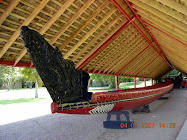
Ngātokimatawhaorua.
This mighty waka (canoe) was built by the Ngā Puhi people for the 1940 centenary of the signing of the Treaty of Waitangi, and sits on the grounds at Waitangi and is believed to be the largest waka ever built.
Named Ngātokimatawhaorua., the canoe requires a minimum of 76 paddlers and can carry 55 passengers and was launched as part of the Centenary Celebrations in 1940, to mark 100 years since the signing of the Treaty of Waitangi.
Ngātokimatawhaorua Figurehead
It bears the name of the canoe of the great Polynesian explorer Kupe, who visited Aotearoa (New Zealand) many hundreds of years ago. It was carved from the trunks of three large kauri felled in the Puketi Forest, and its design is based on that of earlier waka used by Māori to travel up and down the coast of New Zealand.
It was named after the canoe which brought the Māori people from Hawaiki and was captained by Nukutawhiti, the grandson of Kupe, the Polynesian discoverer of New Zealand. Ngātokimatawhaorua is launched every year on the 6th February, to mark the signing of the Treaty of Waitangi. At 35.7 metres long and up to 2 metres wide, it weighs 12 tonnes, and is a key attraction at the Waitangi Treaty Grounds in the Bay of Islands.
History of Waitangi Treaty Grounds
The Waitangi National Trust estate comprises 506 hectares and includes the site where the Treaty of Waitangi was first signed on the 6th of February 1840. The public have access to this important historic site because it was purchased by Lord and Lady Bledisloe in 1932, and gifted to the people of New Zealand in trust. Lord Bledisloe was Governor-General of New Zealand at the time, and he and Lady Bledisloe visited the property at the suggestion of a local lawyer and MP, Vernon Reed. (Reed had been unable to convince successive governments to purchase the land when it came up for sale).
After only five years in New Zealand and one visit to Waitangi, the Bledisloes recognised the importance of Waitangi as the birthplace of New Zealand as a nation. In November 1932, a Deed of Trust set out the objectives for a place of historic interest, recreation, enjoyment, and benefit for the people of New Zealand, and for the governance of it. Priority was given to the repair and restoration of the former home of the first British Resident to New Zealand, James Busby and his wife Agnes. Initially called the "Residency" the house was renamed, at the request of Lord Bledisloe, to the Treaty House.
Ngātokimatawhaorua.
This mighty waka (canoe) was built by the Ngā Puhi people for the 1940 centenary of the signing of the Treaty of Waitangi, and sits on the grounds at Waitangi and is believed to be the largest waka ever built.
Named Ngātokimatawhaorua., the canoe requires a minimum of 76 paddlers and can carry 55 passengers and was launched as part of the Centenary Celebrations in 1940, to mark 100 years since the signing of the Treaty of Waitangi.
Ngātokimatawhaorua Figurehead
It bears the name of the canoe of the great Polynesian explorer Kupe, who visited Aotearoa (New Zealand) many hundreds of years ago. It was carved from the trunks of three large kauri felled in the Puketi Forest, and its design is based on that of earlier waka used by Māori to travel up and down the coast of New Zealand.
It was named after the canoe which brought the Māori people from Hawaiki and was captained by Nukutawhiti, the grandson of Kupe, the Polynesian discoverer of New Zealand. Ngātokimatawhaorua is launched every year on the 6th February, to mark the signing of the Treaty of Waitangi. At 35.7 metres long and up to 2 metres wide, it weighs 12 tonnes, and is a key attraction at the Waitangi Treaty Grounds in the Bay of Islands.
15. Bay of Islands - Waitangi
Thursday 4 January
The Marae - meeting place
The Marae, sacred open meeting area, generally situated in front of the "whare runanga", communal meeting house, is the area of greatest mana, the place of greatest spirituality ; the place that heightens people's dignity, and the place in which Māori customs are given ultimate expression.
The Marae is the turanga-waewae of the Māori. It is the basis of traditional Māori community life. It is their home. In the Marae official functions take place - celebrations, weddings, christenings, tribal reunions, funerals.
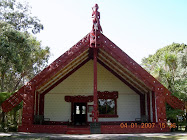
Te Whare Runanga Marae
Te Whare Runanga is the meeting house (marae) at Waitangi, and was built to commemorate the Treaty Centenary Celebrations in 1940. It symbolises Māori involvement in the signing of the Treaty of Waitangi, and its underlying role as the document which brings the people of New Zealand together as one nation and was designed to stand alongside the Treaty House.
Although similar in apperance to other marae around New Zealand, Te Whare Runanga is unique because it was built as a national marae to be shared by all Māori tribes.
As you enter Te Whare Runanga, you will notice a figure at the apex of the gable - this is Kupe, the Pacific explorer. The carvings depict ancestors from many Māori tribes.
Kupe
Kupe sits at the apex, and according to Māori legend he was a great chief of Hawaiki and discovered Aotearoa - Land of the Long White Cloud.
The story of Kupe and the meaning of Aotearoa
Kupe left Hawaiki in his waka the Matawhaorua and travelled in search of the fish of his ancestor, Te-Ika-a-Mäui. He had chased Te Wheke Muturangi (a great octopus) during this search.
While approaching what Kupe believed to be Te-Ika-a-Mäui, the wife of Kupe, Hine Te Aparangi, saw the Southern Alps from a distance and thought they were a cloud and called out, "He ao! He ao!" (A cloud! A cloud!"). As they drew closer she exclaimed "He aotea, he aotearoa!" (A white cloud, a long white cloud!). And so the land was called Aotearoa - 'Land of the long white cloud'.
Kupe confronted and defeated Te Wheke at the entrance to Totaranui (Queen Charlotte Sound) and he travelled around Aotearoa naming many places along the way. After circumnavigating the North and South Islands of Aotearoa, Kupe and his crew returned to Hawaiki with treasures such as preserved moa flesh and pounamu (greenstone).
Entrance
Te Paepae Tapu
This is the threshold, the door sill (of a meeting house door).
Inside Te Whare Runanga
The lighting is fairly subdued so some photos were very dim and have not been included. Tribal art styles are represented in the kowhaiwhai (painted rafter patterns), tukutuku (reed panels) and carvings.
Hand carved totara
The Māori of the South Island contributed this handsome carved totara "Coronation" Chair and a beautiful block of tangi-wai greenstone to rest beneath it.
Wharenui
Inside Te Whare Runanga of Waitangi, the wharenui is the archive of their tribe (iwi) recording priceless history (hitori) through the art of carving, tukutuku panels,and kowhaiwhai (scroll work on rafters).
If you click and enlarge this photo, you can see the detail of the tukutuku and kowhaiwhai.
The Marae - meeting place
The Marae, sacred open meeting area, generally situated in front of the "whare runanga", communal meeting house, is the area of greatest mana, the place of greatest spirituality ; the place that heightens people's dignity, and the place in which Māori customs are given ultimate expression.
The Marae is the turanga-waewae of the Māori. It is the basis of traditional Māori community life. It is their home. In the Marae official functions take place - celebrations, weddings, christenings, tribal reunions, funerals.
Te Whare Runanga Marae
Te Whare Runanga is the meeting house (marae) at Waitangi, and was built to commemorate the Treaty Centenary Celebrations in 1940. It symbolises Māori involvement in the signing of the Treaty of Waitangi, and its underlying role as the document which brings the people of New Zealand together as one nation and was designed to stand alongside the Treaty House.
Although similar in apperance to other marae around New Zealand, Te Whare Runanga is unique because it was built as a national marae to be shared by all Māori tribes.
As you enter Te Whare Runanga, you will notice a figure at the apex of the gable - this is Kupe, the Pacific explorer. The carvings depict ancestors from many Māori tribes.
Kupe
Kupe sits at the apex, and according to Māori legend he was a great chief of Hawaiki and discovered Aotearoa - Land of the Long White Cloud.
The story of Kupe and the meaning of Aotearoa
Kupe left Hawaiki in his waka the Matawhaorua and travelled in search of the fish of his ancestor, Te-Ika-a-Mäui. He had chased Te Wheke Muturangi (a great octopus) during this search.
While approaching what Kupe believed to be Te-Ika-a-Mäui, the wife of Kupe, Hine Te Aparangi, saw the Southern Alps from a distance and thought they were a cloud and called out, "He ao! He ao!" (A cloud! A cloud!"). As they drew closer she exclaimed "He aotea, he aotearoa!" (A white cloud, a long white cloud!). And so the land was called Aotearoa - 'Land of the long white cloud'.
Kupe confronted and defeated Te Wheke at the entrance to Totaranui (Queen Charlotte Sound) and he travelled around Aotearoa naming many places along the way. After circumnavigating the North and South Islands of Aotearoa, Kupe and his crew returned to Hawaiki with treasures such as preserved moa flesh and pounamu (greenstone).
Entrance
Te Paepae Tapu
This is the threshold, the door sill (of a meeting house door).
Inside Te Whare Runanga
The lighting is fairly subdued so some photos were very dim and have not been included. Tribal art styles are represented in the kowhaiwhai (painted rafter patterns), tukutuku (reed panels) and carvings.
Hand carved totara
The Māori of the South Island contributed this handsome carved totara "Coronation" Chair and a beautiful block of tangi-wai greenstone to rest beneath it.
Wharenui
Inside Te Whare Runanga of Waitangi, the wharenui is the archive of their tribe (iwi) recording priceless history (hitori) through the art of carving, tukutuku panels,and kowhaiwhai (scroll work on rafters).
If you click and enlarge this photo, you can see the detail of the tukutuku and kowhaiwhai.
Subscribe to:
Posts (Atom)