Pages

New Zealand - Aotearoa by BlossomFlowerGirl

New Zealand Time

Aotearoa Snapshots

Click on Flag or Select Your Language to Translate

ArabicChinese (Simplified)DutchEnglishFrenchGermanHindiIndonesianItalianJapanesePortugueseRussianSpanishTurkishUrduBengaliNepali

Tēnā koutou katoa

This is all about New Zealand - Aotearoa - and the time I spent there. Magical times, beautiful scenery, gushing geysers, thermal wonderlands. Hear about Waitangi Day, discover the meaning of the word "Aotearoa", see the Glaciers, read about hangis and Hakas, and visit the beautiful Bay of Islands. So come with me on a journey - a journey to The Land of The Long White Cloud.
Kia ora


CHRISTCHURCH EARTHQUAKE TRIBUTE 2011


Watch The Haka

Showing posts with label z Trees and Flowers. Show all posts

17. The Hibiscus Coast

Friday 5 January

Today we head back to Auckland. Driving along the west coast of the Twin Coast Discovery Highway, passing through Kawakawa and Whangarei, down to Warkworth and finally Auckland.

Alpacas


On the way we stopped at Sheepworld Farm and Nature Park and saw the alpacas.

Alpacas


Hand Feeding the Animals

This was a lunch/meal break and we were here for a while. Some fed the alpacas, others just enjoyed the surroundings.


Flowers and Ferns

There were lovely gardens and ferneries and a small brook.


On the way

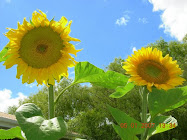
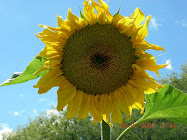
Here we have sunflowers at Whangarei, an Internet Cafe and "Buzzy Bee" a New Zealand icon. Here it is as a children's ride.


Brynderwyn Hills

We travelled through the beautiful Brynderwyn Hills which is one of the most prominent geographical features between Whangarei and Auckland. The Brynderwyn hills stretch from the Mangawhai Heads on the east coast nearly halfway to the eastern arms of the Kaipara Harbour.

Brynderwyn Hills

11. Bay of Islands Russell - Pompallier House

Thursday 4 January

Coming back from the Hole in the Rock cruise, for an extra $4 you can get dropped off at Russell and then get the Russell ferry, the Bay Belle, which runs every 20 minutes back to Paihia, and this is what I did.


Pompallier House


In 1839 French Catholic Bishop Jean Baptiste François Pompallier established a mission at Kororāreka, where a two-storied building, housing a printery, tannery and storehouse, was constructed. When priests of the mission moved on, the building was used as a tannery and, from the 1870s, as a grand private home.

Bought by the government as an historic place in 1943, Pompallier House was for many years presented as a stately residence, with gracious verandahs and gardens.

Pompallier House rear garden and a detailed history


This French factory was built in pioneer New Zealand to print Maori language books for the Roman Catholic Mission. The last remaining building of a once-crowded mission headquarters, it is New Zealand's oldest Catholic building, and the oldest industrial building.

In 1838 three Frenchmen, a bishop, a priest and a brother of the recently-formed Society of Mary landed at the Hokianga. The arrival of a French Catholic Mission in New Zealand outraged the English Church Missionary Society and Wesleyan missionaries, who despised Catholicism and thought Maori should be Protestant. It also disturbed the British Resident at Waitangi, James Busby, who feared colonisation by France. But despite their hostility Bishop Jean-Baptiste François Pompallier's mission survived.

Reinforced by the arrival of more French Marist recruits, the Bishop moved to the Bay of Islands in 1839 to found the headquarters of his Vicariate of Western Oceania at Kororareka (now Russell). Kororareka, just across the water from the Protestant Church Missionary station at Paihia and James Busby's Residence at Waitangi, was by now the major trading port of the South Seas. New French Catholic recruits and supplies arrived here from France and were despatched around New Zealand and the Western Pacific. From here Bishop Pompallier and his confreres attended Treaty negotiations at Waitangi in February 1840. And they were here when war broke out on the neighbouring hillside five years later.

Our Lady of Mount Carmel


The narrow site and single, simple building that the Bishop purchased here soon became crowded with a chapel, cookhouse, well house, workshop, houses for Maori visitors and boatmen, and other outhouses. But the Marists knew that to spread Catholicism and to counter the "heresy" of their Protestant rivals they must produce religious texts in Maori. Spurred by the arrival of a printer and printing tools and equipment, they built a printery in 1841-42.

Short of funds, they resorted to the construction traditional to their native Lyon and Rhone Valley in the south of France. The lower storey is made of pise de terre, or rammed earth. The upper storey in pan de bois, or earth panels in a timber frame. The resulting impressive and elegant two-storey French colonial building, completed in 1842, has been a key feature of the town ever since.

In October 1842 the first Maori translations were ready and the printery, complete with bookbindery and tannery, began production. Its crowning achievement was 6,000 handmade copies of the 648-page Ko te Ako me te Karakia o Te Hahi Katorika Romana (The Teachings and Prayers of the Roman Catholic Church).

Religious Artefacts


By 1850, disagreement between Bishop Pompallier and the Marist Society, together with the demands of the growing colony, had led to their moving to Auckland and Wellington respectively. In 1856 the Kororareka mission property was sold to James Callaghan, who tanned leather in the printery until 1863, then moved into it with his family. By 1879, when the Greenways acquired the property, the building was derelict. But Hamlyn Greenway transformed it into an elegant home while his sister, Jane Mair, created a garden from the once-crowded mission compound and the neighbouring property, which Hamlyn also acquired. Then in 1904 the Stephenson family moved in and further developed both house and garden.

All of the families altered the building to suit themselves, but in doing so weakened it. This problem was compounded in 1943 when the Government transformed the house into a historic monument, "Pompallier House". The New Zealand Historic Places Trust took responsibility for the building in 1967. Realising that its history had been misunderstood (it had never been a bishop's palace) and that it had been structurally degraded, in 1990-93 the situation was resolved by returning the building to its original form in a restoration project that was a milestone for New Zealand heritage conservation.

The printery including the original printing press, bookbindery and tanning pits are again working to produce reproductions of the Roman Catholic prayer and instruction books that were printed here in the Maori language through the 1840s. The printery is the only building to survive of the crowded mission site.

The site of the first Roman Catholic chapel is marked in the beautiful garden that was created around 1880 long after the mission was disestablished. The garden is restored to its full glory as the Victorian/Edwardian garden of the later lay owners of Pompallier.
9. Bay of Islands - Paihia Esplanade Walk

Wednesday 3 January

Paihia is known as the Jewel of the Bay of Islands. The tree is the Pohutukawa Tree, also called the New Zealand Christmas Tree, and is one of the most outstanding plants of the entire New Zealand flora. With beautiful bright crimson flowers it is tough and hardy and can be seen in profusion along the coastal areas.

The Jewel in the Crown


Paihia Visitor Information Centre


This beautiful old building houses the Visitor Information Centre and other retail shops and is located at the Wharf in Marsden Road. The helpful staff will help organise and book activities, transport and cruises. Set amid beautiful clear waters it's a real delight just to stroll down and around this lovely area.


Ducks Crossing


One of the signs I spotted on my walk - alas I became "delete" happy and lost a few photos. (Sigh)

Paihia Hibiscus


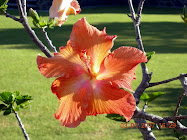
Nodding in the breeze was this hibiscus along the waterfront.

4. Bay of Islands - Magicbus, Matakohe and Waipoua Forest

Wednesday 3 January

Up early today - today is the start of my "tour" with Magic - New Zealand's hop-on/hop-off backpacker bus. Below are the two passes I chose - Kiwi Traverse and Northland Escape. But when I did this, the route for Northland was different - we headed north along the Kauri coast (west)then east to Paihia and south down the Hibiscus coast (east coast)


The driver pulled up at the YHA around 8.50am, loaded up our luggage and we were off.


Matakohe House

Our first stop was at Matakohe. We visited the Kauri and Pioneer Museum and had morning tea/early lunch at Matakohe House, where I enjoyed a couple of sausage rolls and a yummy slice of carrot cake. Matakohe House is a charming B & B and has a licensed cafe and their menu consists of fresh, locally home-grown produce and often freshly caught seafood. The staff were friendly and helpful and it was a very pleasant place to spend time enjoying good coffee and the comfortable atmosphere.
For the convenience of the travelling public, toilets (wheelchair friendly) are provided within the cafe complex. Also available to the coach crews is an area in which they can relax, read the newspaper or watch television while their passengers enjoy the varied attractions


Tane Mahuta

After passing through Dargville, the road narrows somewhat on the way through the Waipoua Forest, which was our second stop of the day. The forests of Waipoua are the garden of Tane Mahuta - the "Lord of the Forest", the largest Kauri tree in New Zealand, with a height of 52 metres. it is said to be 1,200 years old.

The Story of Tane Mahuta
In the beginning there were no earth, no sky, no sea. Out of this desire came the two primal parents Papatuanuku ( the Earth mother) and Ranginui ( the Sky father). They embraced in the realm of night and seventy children were born to them, all male, and thus Ira Atua (the first family) came into being. Living in darkness and longing to experience the Image courtesy of Taiamai Toursworld of light and day, the siblings decided that their parents should be separated.

However, not all the children agreed. Tumatauenga ( the deity of war) wanted them killed. Tane Mahuta ( the deity of man and forests and everything that dwells within) thought they should be separated, with Ranginui going above t the sky and Papatuanuku dwelling on the earth below. In turn they tried to separate their parents. Rongomatane (deity and father of cultivated foods) tried, but with no success. Tangaroa (deity of the sea), followed by Tumatauenga also tried but to no avail. Finally Tane Mahuta placed his shoulders against the ground, thrust his feet upwards and pushed.

The sinews binding his parents stretch back and forth, heaving and swaying, until finally the parents were separated and the children experienced Te Ao Marama (light of day) for the first time. When this happened, Tawhirimatea (deity and father of winds and storms) who had not agreed to the separation, went up to the sky to be with his father.

When the separation was completed there was only one thing lacking, the uha ( female element). Since there were no women, Tane took some clay from a place known as kura-waka and fashioned it into the form of a women. Then he breathed life into the nostrils, and thus was created Hine-ahu-one (the earth formed maiden). Tane Mahuta and Hine-ahu-one had a daughter and thus the family of man had begun.



The Passion Wagon/Shaggin' Wagon

This van from Wicked Campers was parked on the outskirts of the forest and gave rise to much merriement - it seemed to be a throwback to the "hippy" days of the 1960's - make love not war!

Matakohe Click on blue marker for photo

View Matakohe House in a larger map
Related Posts Plugin for WordPress, Blogger...