Thursday 11 January
AS I strolled along the waterfront, my next stop was at Te Papa Tongawera - or as it is more commonly known, just Te Papa. It is New Zealand's national museum and has a huge array of Māori exhibits. It also had an entire floor devoted to LOTR!
Te Papa Tongawera
Ceremonial Chair
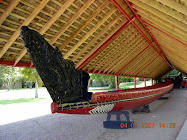
Waka
Basket
Necklace
Skirt
Sandals
Sandals woven from flax.
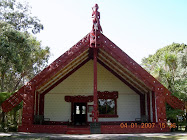
Marae
Te Hono ki Hawaiki
Te Hono ki Hawaiki is not a conventional meeting-house but, rather, a foreshortened structure at the rear of the open performance space or marae atea.
Corrugated HQ Holden
This 1974 Holden Kingswood was clad with corrugated iron by Jeff Thomson in 1991 and driven around for three years. It is one of the most popularly photographed items in the museum.
Tēnā koutou katoa
This is all about New Zealand - Aotearoa - and the time I spent there. Magical times, beautiful scenery, gushing geysers, thermal wonderlands. Hear about Waitangi Day, discover the meaning of the word "Aotearoa", see the Glaciers, read about hangis and Hakas, and visit the beautiful Bay of Islands. So come with me on a journey - a journey to The Land of The Long White Cloud.
Kia ora
CHRISTCHURCH EARTHQUAKE TRIBUTE 2011
Kia ora
Watch The Haka
Showing posts with label z Art and Sculpture. Show all posts
38. Wellington - Harbour Walk
Thursday 11 January
After riding on the cable car, I strolled along the waterfront of Wellington's magnificent harbour, which I thought much prettier than Auckland's.
Wellington Harbour
Academy Galleries
Founded in 1882, the Academy of Fine Arts is now housed on the ground floor of the architecturally stunning and heritage protected Wharf Offices Apartments Building in Queen's Wharf.
The Academy Galleries support New Zealand's emerging and established artists through the sale of New Zealand Art as well as fostering a national appreciation and pride of fine art produced by artists around the country.
A non-profit making private company, the Galleries is located at 1 Queens Wharf Lambton just a 2 minute walk from Downtown Wellington.
Frank Kitts Park - Climbing Lighthouse
The lighthouse was designed in the late 1980's by Mark Pennington.
Completed in the late 1980s, Frank Kitts Park on Jervois Quay in the central city, was one of the first areas of the waterfront to be developed. The design was heavily influenced by the annual street car race that ran through the area at that time.
The waterfront also bustles with a myriad of cafes, restaurants and bars. After your waterfront adventure relax with a cup of coffee or a meal. Sit back and take in the breathtaking views.
The Mast from the Wahine
The fore-mast is part of a memorial and is in Frank Kitts Park.
The Wahine was an Interislander ferry which sank on 10 April 1968. Of the 610 passengers and 123 crew on board, 51 people lost their lives.
Two violent storms merged over Wellington, creating a single extratropical cyclone storm - Cyclone Giselle hit as the Wahine was crossing Cook Strait Captain Hector Robertson entered Pencarrow Head but the Wahine hit the rocks on Barrett Reef. The radar no longer worked and winds were up to 160 km/h.
Further reading about the Wahine disaster.
Wellington Harbour
Wellington’s magnificent harbour is a lake-like expanse of sheltered water surrounded by hills, with a narrow entrance to the sea.
A raised rock platform (a legacy of the great 1855 earthquake) surrounds the harbour’s edge. Today much of this is obscured by roads. In other places it is interspersed with sandy beaches.
In Māori the harbour is Te Whanganui-a-Tara (the great harbour of Tara) and Pōneke is the Māori name for Wellington.
Light Balls & Boatsheds
In the rear is the Star Boating Club which was formed in 1856 and is believed to be one of the oldest surviving sports clubs in New Zealand.
William Chatfield, the Thorndon Village Architect, designed the current club building on iron rails in 1885. It was later moved to Jervois Quay and is now at the Taranaki St Wharf
These spherical "balls" of which there are 33 in total, are called light balls and were created not only to represent bollards but to also provide lighting features.
Kupe, with Wife and Priest
The imposing bronze Kupe Group Statue, occupying pride of place on Taranaki Street Wharf, was originally designed in 1939 by Christchurch sculptor William Threthewey for the 1940 New Zealand Centennial Exhibition held at Rongotai, Wellington.
It was originally created in plaster and finished with bronze paint. Following the exhibition, the statue sat for 40 years at the Wellington Railway Station and ten at the Wellington Show and Sports Centre before being stored at the Te Papa, the national museum in 1997, as a national treasure. The statue was cast in bronze in 1999 as a millenium project and unveiled on 4 March 2000 as a tribute to all who have come to these shores.
The sculpture features Kupe Raiatea, the great Māori explorer and discoverer of Wellington harbour, his wife Te Aparangi and tohunga Pekahourangi.
The plaque at the base reads:
Matahourua te waka, ko Kupe te tangata, ko Hine-te-aparangi te wahine.
Kupe Raiatea the Explorer.
His wife Hine-te-aparangi.
And Pekahourang the tohunga
Sight Aotearoa, New Zealand
from their canoe Matahourua.
Circa Theatre
The theatre was formed in 1976, by an innovative group of people committed to presenting theatre of the highest possible standard.
In 1994 Circa moved to its present purpose-built site on the waterfront. Grant Tilly, one of the original Circa members, worked as theatre consultant with Ampersand Architects Ltd.
Apart from the historic brick Westport Chambers facade facing the Museum Plaza all new construction is timberThe main auditorium can seat around 250. and an extra 100 in a smaller studio space.
Harbour Walk
Click on the blue markers for photo, you can also enlarge the map.
View Wellington in a larger map
After riding on the cable car, I strolled along the waterfront of Wellington's magnificent harbour, which I thought much prettier than Auckland's.
Wellington Harbour
Academy Galleries
Founded in 1882, the Academy of Fine Arts is now housed on the ground floor of the architecturally stunning and heritage protected Wharf Offices Apartments Building in Queen's Wharf.
The Academy Galleries support New Zealand's emerging and established artists through the sale of New Zealand Art as well as fostering a national appreciation and pride of fine art produced by artists around the country.
A non-profit making private company, the Galleries is located at 1 Queens Wharf Lambton just a 2 minute walk from Downtown Wellington.
Frank Kitts Park - Climbing Lighthouse
The lighthouse was designed in the late 1980's by Mark Pennington.
Completed in the late 1980s, Frank Kitts Park on Jervois Quay in the central city, was one of the first areas of the waterfront to be developed. The design was heavily influenced by the annual street car race that ran through the area at that time.
The waterfront also bustles with a myriad of cafes, restaurants and bars. After your waterfront adventure relax with a cup of coffee or a meal. Sit back and take in the breathtaking views.
The Mast from the Wahine
The fore-mast is part of a memorial and is in Frank Kitts Park.
The Wahine was an Interislander ferry which sank on 10 April 1968. Of the 610 passengers and 123 crew on board, 51 people lost their lives.
Two violent storms merged over Wellington, creating a single extratropical cyclone storm - Cyclone Giselle hit as the Wahine was crossing Cook Strait Captain Hector Robertson entered Pencarrow Head but the Wahine hit the rocks on Barrett Reef. The radar no longer worked and winds were up to 160 km/h.
Further reading about the Wahine disaster.
Wellington Harbour
Wellington’s magnificent harbour is a lake-like expanse of sheltered water surrounded by hills, with a narrow entrance to the sea.
A raised rock platform (a legacy of the great 1855 earthquake) surrounds the harbour’s edge. Today much of this is obscured by roads. In other places it is interspersed with sandy beaches.
In Māori the harbour is Te Whanganui-a-Tara (the great harbour of Tara) and Pōneke is the Māori name for Wellington.
Light Balls & Boatsheds
In the rear is the Star Boating Club which was formed in 1856 and is believed to be one of the oldest surviving sports clubs in New Zealand.
William Chatfield, the Thorndon Village Architect, designed the current club building on iron rails in 1885. It was later moved to Jervois Quay and is now at the Taranaki St Wharf
These spherical "balls" of which there are 33 in total, are called light balls and were created not only to represent bollards but to also provide lighting features.
Kupe, with Wife and Priest
The imposing bronze Kupe Group Statue, occupying pride of place on Taranaki Street Wharf, was originally designed in 1939 by Christchurch sculptor William Threthewey for the 1940 New Zealand Centennial Exhibition held at Rongotai, Wellington.
It was originally created in plaster and finished with bronze paint. Following the exhibition, the statue sat for 40 years at the Wellington Railway Station and ten at the Wellington Show and Sports Centre before being stored at the Te Papa, the national museum in 1997, as a national treasure. The statue was cast in bronze in 1999 as a millenium project and unveiled on 4 March 2000 as a tribute to all who have come to these shores.
The sculpture features Kupe Raiatea, the great Māori explorer and discoverer of Wellington harbour, his wife Te Aparangi and tohunga Pekahourangi.
The plaque at the base reads:
Matahourua te waka, ko Kupe te tangata, ko Hine-te-aparangi te wahine.
Kupe Raiatea the Explorer.
His wife Hine-te-aparangi.
And Pekahourang the tohunga
Sight Aotearoa, New Zealand
from their canoe Matahourua.
Circa Theatre
The theatre was formed in 1976, by an innovative group of people committed to presenting theatre of the highest possible standard.
In 1994 Circa moved to its present purpose-built site on the waterfront. Grant Tilly, one of the original Circa members, worked as theatre consultant with Ampersand Architects Ltd.
Apart from the historic brick Westport Chambers facade facing the Museum Plaza all new construction is timberThe main auditorium can seat around 250. and an extra 100 in a smaller studio space.
Harbour Walk
Click on the blue markers for photo, you can also enlarge the map.
View Wellington in a larger map
36. Wellington - City Walk
Thursday 11 January
After a lazy morning spent reading, I walked down Wakefield Street and bought a pegless clothesline from the Camping Store for $9.80 and found some lovely Christmas wrapping paper and postcards from Whitcoulls - made in England and only $3.00!
Wellington is becoming known as a centre for works of contemporary public art. Much of this reputation is based on the many sculptures commissioned from leading artists by the Wellington Sculpture Trust.
The Trust, active since 1984, raises funds and selects a wide variety of art for particular sites. It has the full support of the Wellington City Council which makes the sites available, assists with funding and assumes ownership after completion.
John Plimmer Statue
A man and his dog - John Plimmer (1812 – 1905) came from Shropshire on the ship Gertrude in 1841 & is called the Father of Wellington He was a member of the Wellington Provincial Council 1856-1857 the first Wellington Town Board 1863 & was on the Wellington City Council 1870-1871
His principal public service was the organisation of the Wellington & Manawatu Railway Company between 1880 & 1886
This bronze statue was created by Tom Tischler Ross Wilson Judy Alexander & Peter Kundycki in 1996 and is at the Plimmer Steps.
Bank of New Zealand
The Old Bank Building is one of Wellington's most famous landmarks - 2001 marked the hundred-year anniversary of this magnificent building - a testament as much to the architecture of John Turnbull & the original builders as it is to the incredible restoration work that has seen the Old Bank return to its former glory
A trip to the Old Bank is not just a retail thrill - it's a chance to experience a world of history and style that transcends the ages
It now houses the most exquisite fashion & beauty designs
Protoplasm
Created by Phil Price and located on the corner of Hunter Street and Lambton Quay, this interesting sculpture is one of several called Protoplasm.
Cable Car Lane
The Cable Car sculpture was created by Hugh Nicholson and Bob Sharpe in 2002, and is made of steel. It is located at Cable Car Lane.
Invisible City
Invisible City by Anton Parons was presented to the city with assistance from the Jack and Emma Griffin Charitable Trust and the Wellington City Council.
The stainless steel of this sculpture seems to glow with an inner light. The magnified Braille text suggests a message, but the artist chooses to deny us access, raising issues of communication in the contemporary world, and the difficult interface between the disabled and the rest of the community.
It was installed 2003.
Walk To The Water
This sculpture made of steel was created by Jerry Luhman and Bob Sharpe in 2000 and is at the corner of Grey Street & Lambton Quay.
After a lazy morning spent reading, I walked down Wakefield Street and bought a pegless clothesline from the Camping Store for $9.80 and found some lovely Christmas wrapping paper and postcards from Whitcoulls - made in England and only $3.00!
Wellington is becoming known as a centre for works of contemporary public art. Much of this reputation is based on the many sculptures commissioned from leading artists by the Wellington Sculpture Trust.
The Trust, active since 1984, raises funds and selects a wide variety of art for particular sites. It has the full support of the Wellington City Council which makes the sites available, assists with funding and assumes ownership after completion.
John Plimmer Statue
A man and his dog - John Plimmer (1812 – 1905) came from Shropshire on the ship Gertrude in 1841 & is called the Father of Wellington He was a member of the Wellington Provincial Council 1856-1857 the first Wellington Town Board 1863 & was on the Wellington City Council 1870-1871
His principal public service was the organisation of the Wellington & Manawatu Railway Company between 1880 & 1886
This bronze statue was created by Tom Tischler Ross Wilson Judy Alexander & Peter Kundycki in 1996 and is at the Plimmer Steps.
Bank of New Zealand
The Old Bank Building is one of Wellington's most famous landmarks - 2001 marked the hundred-year anniversary of this magnificent building - a testament as much to the architecture of John Turnbull & the original builders as it is to the incredible restoration work that has seen the Old Bank return to its former glory
A trip to the Old Bank is not just a retail thrill - it's a chance to experience a world of history and style that transcends the ages
It now houses the most exquisite fashion & beauty designs
Protoplasm
Created by Phil Price and located on the corner of Hunter Street and Lambton Quay, this interesting sculpture is one of several called Protoplasm.
Cable Car Lane
The Cable Car sculpture was created by Hugh Nicholson and Bob Sharpe in 2002, and is made of steel. It is located at Cable Car Lane.
Invisible City
Invisible City by Anton Parons was presented to the city with assistance from the Jack and Emma Griffin Charitable Trust and the Wellington City Council.
The stainless steel of this sculpture seems to glow with an inner light. The magnified Braille text suggests a message, but the artist chooses to deny us access, raising issues of communication in the contemporary world, and the difficult interface between the disabled and the rest of the community.
It was installed 2003.
Walk To The Water
This sculpture made of steel was created by Jerry Luhman and Bob Sharpe in 2000 and is at the corner of Grey Street & Lambton Quay.
Subscribe to:
Posts (Atom)